
Egyptian and Gulf Food Macros: A Coach’s Calorie Table
Calories and macros for ful, falafel, molokhia, mahshi, shawarma, kabsa and dates from published analyses, plus how to portion local food for fat loss or muscle gain.
Makaleler şu an İngilizce ve Arapça olarak mevcut.
9 dk okuma · · UM ekibi
Estimate Egyptian and Gulf dishes by weight, not by plate: 100 g of ful medames is about 116 kcal with 5 g protein, falafel about 339 kcal, and meat kabsa about 137 kcal. These figures come from published lab analyses and USDA FoodData Central. They shift with the recipe and the oil, so treat them as a starting point and have clients weigh food for two weeks.
A client messages: "Breakfast was ful, ta’meya and bread." You have no idea if that was 400 calories or 900. Global tracking apps list a "falafel wrap", but not the ful their mother made with chilli oil, or the Friday kabsa.
This is a working table for coaches: the most common Egyptian and Gulf dishes, their values per 100 g from published sources, how to estimate portions, and how to keep these foods in a fat-loss or muscle-gain plan instead of banning them.
Why are Egyptian and Gulf dishes hard to track?
Because most are mixed dishes cooked at home, and every household uses different amounts of oil, ghee and rice. The same dish name can carry very different calories from one kitchen to the next.
Fat is the biggest variable. One tablespoon of olive oil (13.5 g) is about 119 kcal according to USDA. Two extra spoons on a plate of ful add close to 240 kcal without changing how the plate looks.
Cooking method matters too. A 2021 analysis of foods sampled in Egypt found 17.8% fat in falafel, about 5% in koshari and about 9% in shawarma. Falafel fried in reused oil carried far more trans fat: 4.8 g per 100 g of fat, against 0.9 g in fresh oil.
How many calories and macros are in common Egyptian and Gulf dishes?
The table gathers per-100 g values for cooked food from published sources: a lab analysis of Eastern Mediterranean dishes (2021), an analysis of traditional Saudi dishes (2025) and USDA FoodData Central for simple items. The "example portion" column is calculated from the same numbers to help you picture the plate. It is not a fixed serving for every client.
| Dish | Per 100 g: kcal · protein/carbs/fat | Example portion | Portion: kcal · protein/carbs/fat |
|---|---|---|---|
| Ful medames | 116 · 5.3 / 14.2 / 4.2 | 200 g | 232 · 10.6 / 28.4 / 8.4 |
| Ta’meya / falafel | 339 · 13.3 / 36.5 / 15.6 | 100 g | 339 · 13.3 / 36.5 / 15.6 |
| Molokhia (stew, no rice) | 112 · 5.4 / 11.9 / 4.8 | 250 g | 280 · 13.5 / 29.8 / 12 |
| White rice, boiled | 130 · 2.7 / 28.2 / 0.3 | 150 g | 195 · 4.1 / 42.3 / 0.5 |
| Stuffed courgette (mahshi) | 123 · 3.8 / 20.3 / 2.9 | 250 g | 308 · 9.5 / 50.8 / 7.3 |
| Stuffed cabbage (mahshi) | 75 · 3.8 / 12.1 / 1.3 | 250 g | 188 · 9.5 / 30.3 / 3.3 |
| Stuffed vine leaves | 102 · 4.4 / 17.7 / 1.5 | 150 g | 153 · 6.6 / 26.6 / 2.3 |
| Chickpea fatteh | 159 · 6.5 / 15.8 / 7.7 | 250 g | 398 · 16.3 / 39.5 / 19.3 |
| Hummus with tahini | 146 · 7.5 / 17.2 / 5.2 | 100 g | 146 · 7.5 / 17.2 / 5.2 |
| Chicken shawarma (meat only) | 197 · 29.7 / 1.1 / 8.2 | 150 g | 296 · 44.6 / 1.7 / 12.3 |
| Beef shawarma (meat only) | 179 · 17.5 / 2.6 / 11 | 150 g | 269 · 26.3 / 3.9 / 16.5 |
| Meat kabsa | 137 · 7.3 / 15.6 / 5 | 350 g | 481 · 25.5 / 54.5 / 17.4 |
| Chicken kabsa | 108 · 5.1 / 14.6 / 3.3 | 350 g | 380 · 17.7 / 51.2 / 11.4 |
| Pita / Arabic bread, white | 275 · 9.1 / 55.7 / 1.2 | 60 g | 165 · 5.5 / 33.4 / 0.7 |
| Medjool dates | 277 · 1.8 / 75 / 0.2 | 3 dates (72 g) | 199 · 1.3 / 54 / 0.1 |
A few notes that matter:
- Falafel: the USDA value for home-prepared falafel is very close (333 kcal and 13.3 g protein per 100 g), so this one is fairly stable.
- Fatteh: the figure is for Levantine chickpea fatteh. Egyptian meat fattah with toasted bread and rice is much heavier and we found no reliable published analysis, so log it by ingredients.
- Machboos: it is built like kabsa (rice, meat or chicken, oil, spices). Start from the kabsa numbers and adjust for the ghee and oil in your client’s recipe.
- Harees and koshari: we found no complete published calorie analysis. The Egyptian study measured only fat for koshari (about 5%). Log both as ingredients: wheat, meat and ghee for harees; rice, pasta, lentils, sauce and fried onion for koshari.
- Baladi bread and labneh: baladi loaves vary in weight and flour, so weigh your client’s loaf once. Labneh changes a lot with fat level, so read the label.
Write mixed dishes into the plan in cooked grams, and log oil, ghee and tahini as separate items.
How do you estimate a portion of a home-cooked dish?
The easiest way is to have the client weigh the cooked plate for the first two weeks, then learn the portion by eye. You need a consistent method more than perfect accuracy.
- A basic kitchen scale: weigh the empty plate, then the full one, and log the difference.
- For a big family pot: note how much oil or ghee went into the whole pot, and you divide it by the number of servings.
- Photograph the plate next to something of fixed size, like the same plate every time, so you both learn the volume.
- Ask how it was cooked: fried, baked or boiled. That alone changes the fat.
- After two weeks, turn the weights into easy portions: "a medium plate of ful", "one ladle of rice", "three falafel".
The scale and the weekly check-in correct any estimating error. If weight hasn’t moved for two weeks and adherence is high, the oil is usually what’s escaping the count.
How do you fit local food into a fat-loss plan?
Don’t ban it, make it less dense. A client who loves home food will not last on a plan of boiled chicken and broccoli.
- Ful: a 200 g serving with one small spoon of oil instead of a swimming plate, with eggs or cottage cheese for protein.
- Falafel: two or three pieces instead of a full plate, or baked and air-fried versions.
- Shawarma: the chicken itself is high in protein (about 30 g per 100 g in the analysis). The extra calories come from sauce, bread and fries.
- Kabsa and machboos: half the rice, more meat and salad.
- Mahshi: cabbage is lighter than courgette in the analysis (75 vs 123 kcal per 100 g).
- Dates: three Medjool dates are about 200 kcal, so count them as carbs, not a free snack.
How do you use the same food for muscle gain?
These dishes help clients reach high calorie targets without getting bored, as long as you fix the protein. Most mixed dishes are fairly low in protein: meat kabsa has only about 7 g per 100 g.
- Kabsa, machboos and mahshi are easy carb sources around training.
- Add an extra piece of meat or chicken to the plate rather than just more rice.
- Ful and lentils are good plant protein, but you need larger amounts to match the same protein.
- Dates an hour before training are a quick snack most people digest easily.
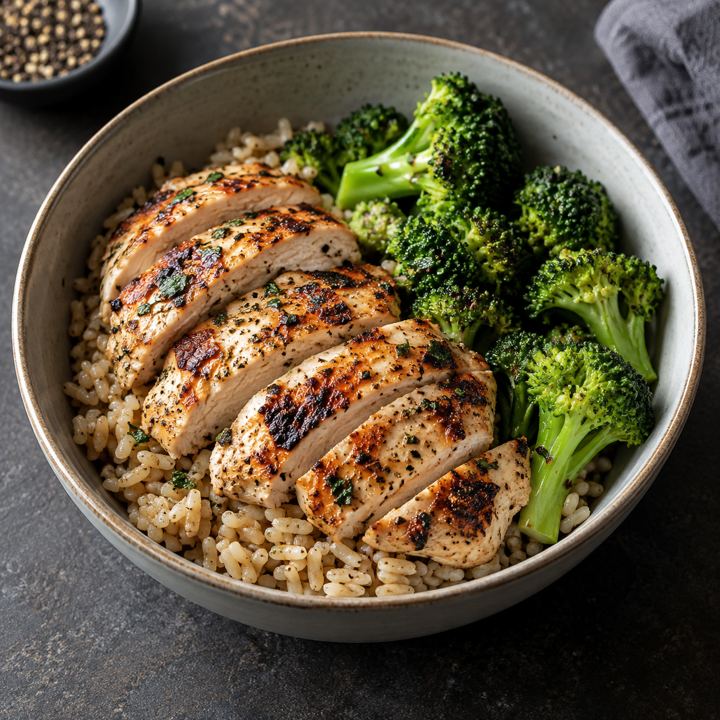 Tavuk, pirinç, brokoli
UM has a library of 5,000+ meals, most with Arabic names, and you can add your own meals with your own quantities. Your client’s ful is counted with the oil they use, not a generic number from a foreign app. The client sees the plan and its swaps in the app instead of a PDF on WhatsApp.
How do you teach clients to estimate on their own?
Teach three questions before any plate: where is the protein, how much starch, how many spoons of oil? Clients who ask these keep going after the package ends, and it builds their trust in you.
If you want to turn this knowledge into content that brings clients, like "the calories in a Friday breakfast" or "how to eat kabsa while cutting", UM Academy has a free marketing and sales course in Arabic.
- Hoteit et al., F1000Research (2021): Lebanese food exchange system based on frequently consumed traditional dishes (Table 2, per 100 g)
- Basaqr et al., Frontiers in Nutrition (2025): Nutritional compositions of traditional dishes from five Saudi regions
- Ismail et al., Nutrients (2021): Fat content and trans isomers in frequently consumed food products in Egypt
- USDA FoodData Central: Falafel, home-prepared (FDC 172455)
- USDA FoodData Central: Bread, pita, white, enriched (FDC 174915)
- USDA FoodData Central: Rice, white, long-grain, regular, enriched, cooked (FDC 168878)
- USDA FoodData Central: Dates, medjool (FDC 168191)
- USDA FoodData Central: Oil, olive, salad or cooking (FDC 171413)
Son güncelleme: