
How to Keep Online Coaching Clients Past Month One
Why online coaching clients quit after the first month and how to keep them: a proper onboarding, the first 14 days, fast voice-note replies, renewal reminders.
No momento, os artigos estão disponíveis em inglês e árabe.
7 min de leitura · · O time da UM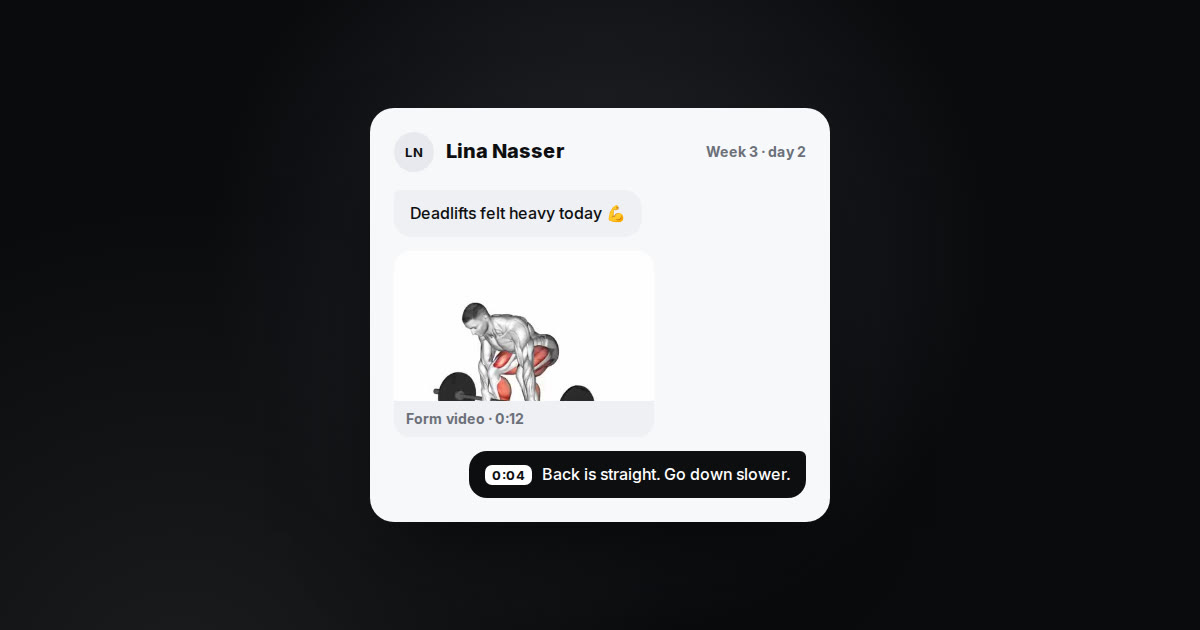
If you want to know how to keep online coaching clients, here is the short answer: clients decide whether to stay in the first 14 days, not at the end of the month. Give them a clear start, reply fast, make progress visible, reach out the moment someone starts slipping, and remind them about renewal before it sneaks up on them.
“They start so motivated. Two weeks later the check-ins stop, and at the end of the month I get ‘let me think about it’.” If that sounds familiar, the program is rarely the problem. The experience around the program is.
Why clients quit after the first month
Most people don’t leave because the training was bad. They leave because they felt alone, couldn’t see results, or got lost between a PDF on WhatsApp and a pile of scattered messages.
- No clear start: they got a PDF and nobody told them how to begin.
- Slow replies: a quick question about an exercise waited a full day.
- Invisible progress: the scale didn’t move for a week, so they assumed nothing was happening.
- Nobody noticed: they stopped logging and stopped replying, and nobody asked.
- Surprise renewal: the subscription ended without warning, so the answer became “maybe later”.
Each of these has a practical fix. None of them needs more hours from you. They need a system.
The first 14 days decide everything
The first two weeks shape how the client sees you: “my coach is on this with me” or “I paid and I’m on my own”. Plan them on purpose.
- Day 1: a personal welcome, ideally a voice note, explaining exactly what happens this week.
- Days 1–2: an intake form covering goals, injuries, food preferences, work schedule, plus starting photos and measurements.
- Day 3: a quick nudge: “Did you get your first session in? Anything unclear?”
- Day 7: the first full weekly check-in, and at least one small adjustment from you.
- Day 14: a short review: what improved, what felt hard, and the goal for the next two weeks.
That Day 7 adjustment matters more than it looks. When clients see the plan change because of what they said, they stop feeling like a name on a list.
A welcome script you can copy: “Hey [name], glad you’re in. This week we’re after one thing: three sessions and logging your food. Send any question any time and I’ll answer the same day. Your first check-in lands Friday.”
Fast replies, and why voice notes win
Clients don’t need long answers. They need to feel you’re there. A 30-second voice note feels warmer than a paragraph and takes you less time.
- Pick two fixed reply windows a day, say morning and evening, and tell clients about them upfront.
- If a question needs thought, acknowledge it now: “Got it, full answer tonight.”
- Use voice for encouragement and changes; use text for numbers and details they will come back to.
- When a client sends a form video, correct one thing at a time so they don’t get overwhelmed.
O levantamento terra pesou hoje
0:04 A coluna está reta. Desça mais devagar.
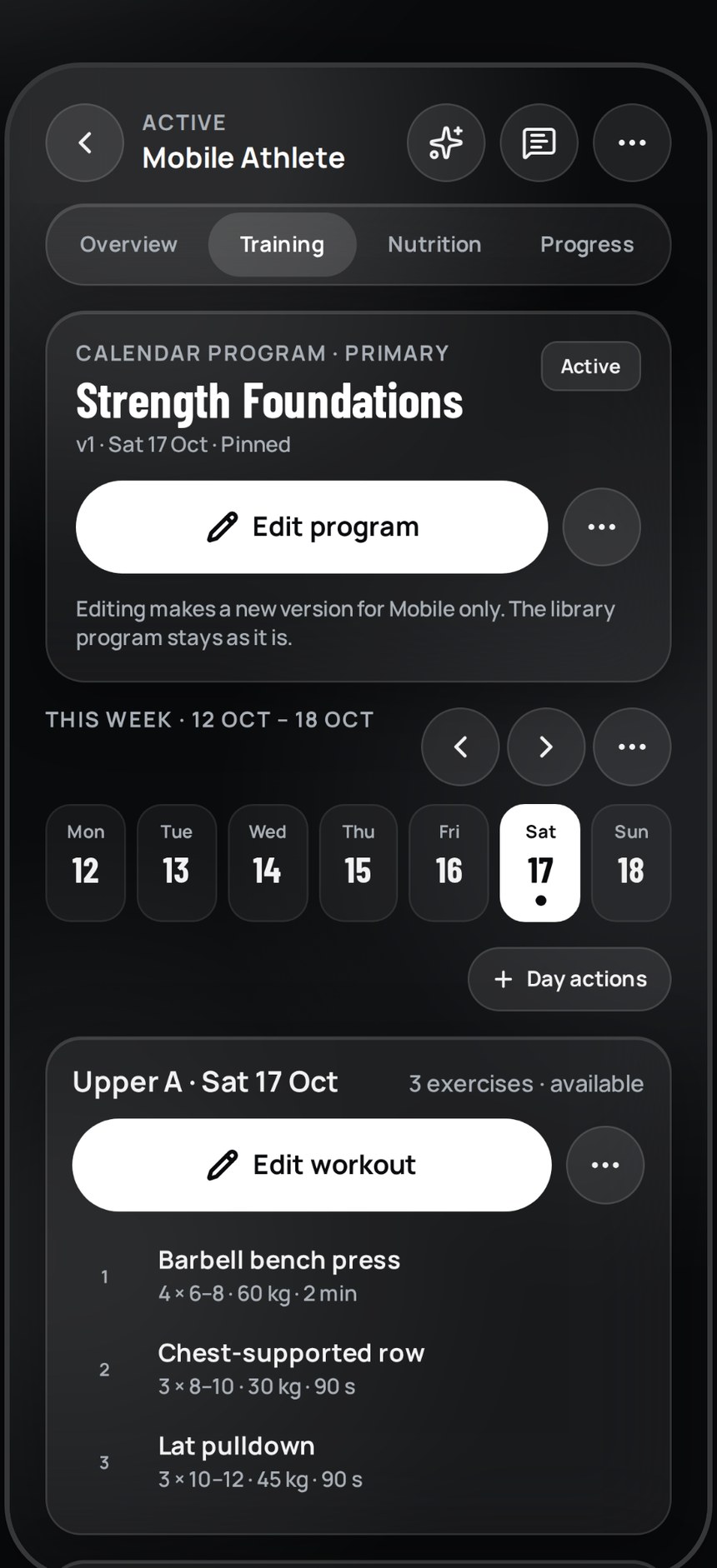
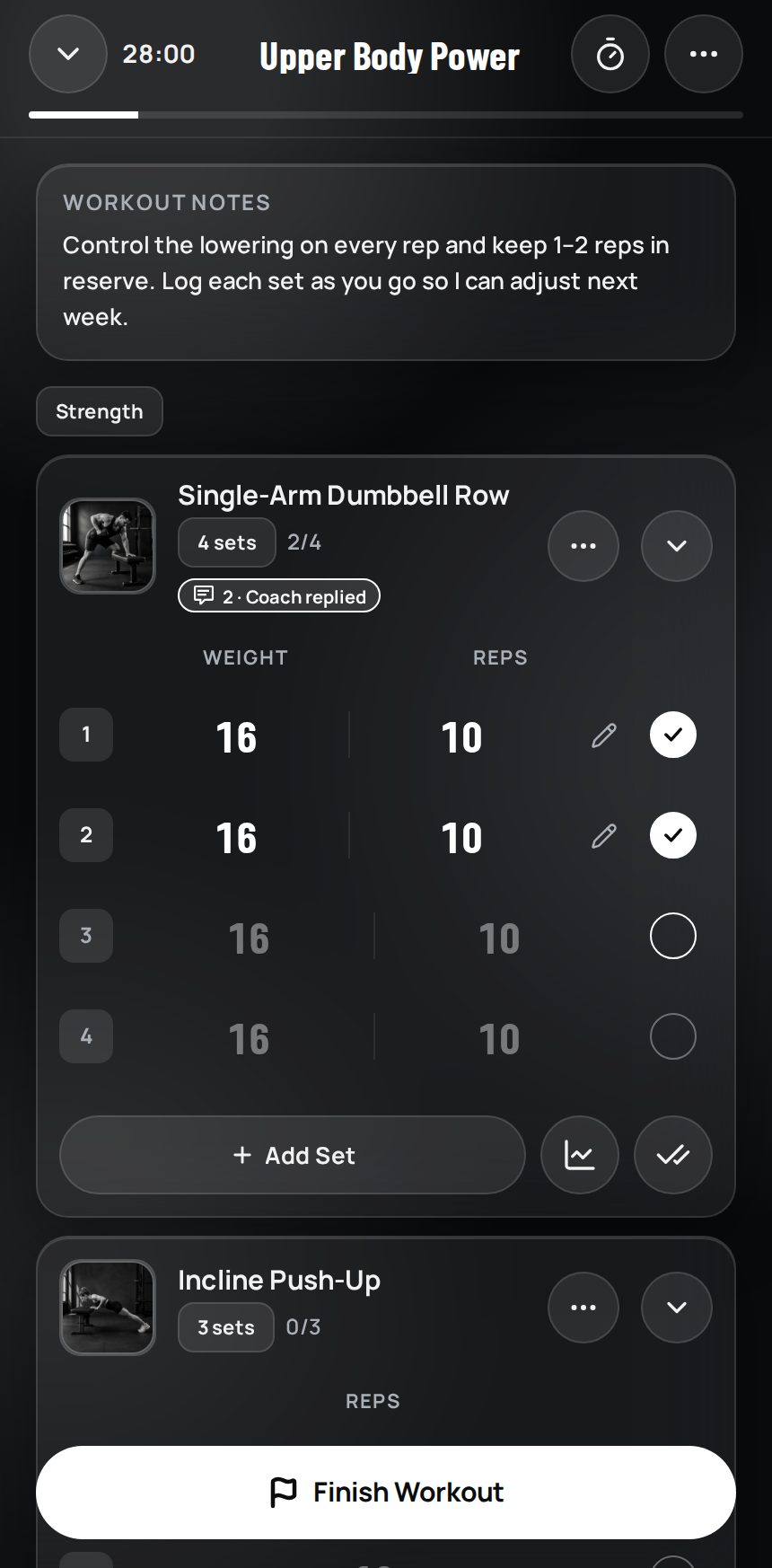
The big difference comes when the chat lives inside the client’s file instead of your personal WhatsApp. In UM, chat, voice notes, the program and check-ins sit in one file, so every reply is made with the full picture in front of you.
Make progress visible, even when the scale is stuck
The sentence that comes right before most cancellations: “I don’t feel like I’m changing.” Usually that’s not true. The client just can’t see the whole picture.
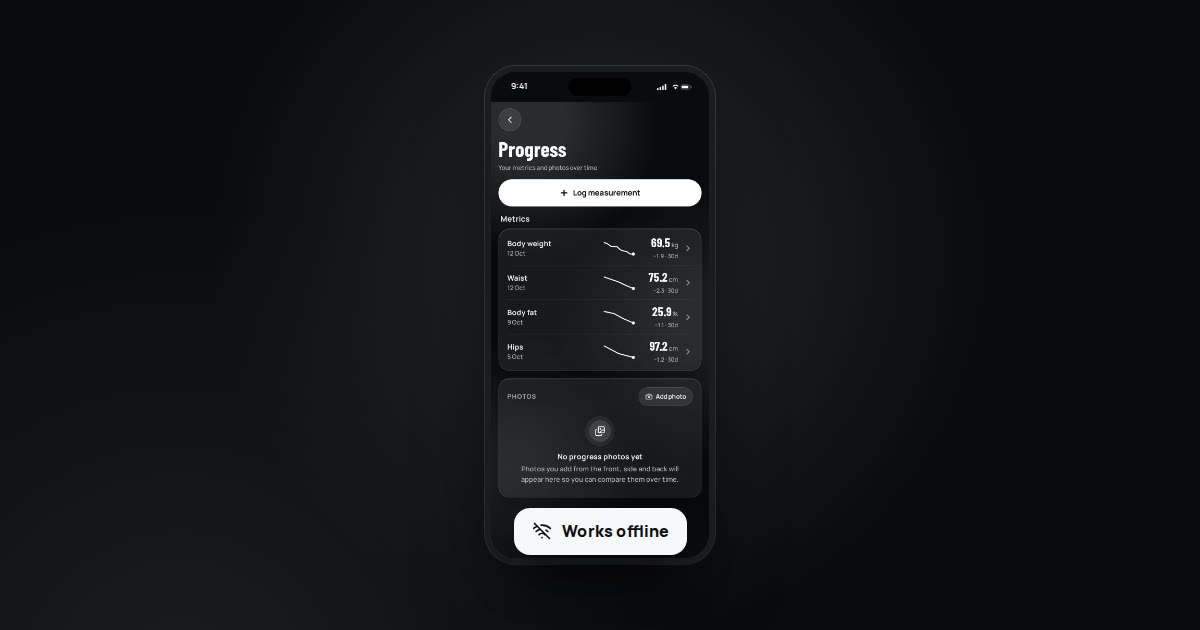
- Measurements, not just weight: waist, hips and arms often move before the scale.
- Side-by-side photos: day one next to week four says more than any number.
- Training numbers: “You were lifting 40 kg, today it’s 50.” That is clear progress.
- Consistency itself: “11 out of 12 sessions this month” deserves to be said out loud.
- Sleep and steps: if the client connects Apple Health or Google Health Connect, show the trend.
Every two weeks, send a short progress recap: three things that improved and one thing to focus on next. Clients who can see their own progress rarely ask why they should renew.
Catch the client who is slipping
Clients don’t cancel out of nowhere. A week or two before, the signs show up. You just have to see them in time.
- The weekly check-in is late or missing.
- They stopped logging workouts or meals.
- Replies shrink to “ok” and “sure”.
- Lots of apologies: “this week was rough”.
When you spot one of these, don’t wait. Send a message with zero blame: “Looks like this week was heavy. What’s hardest right now? Want me to lighten the plan until you’re back on track?” A lighter plan for two weeks beats a lost client.
Every Sunday, pull the list of clients who skipped this week’s check-in and send each one a short voice note. Ten minutes a week saves a lot of clients.
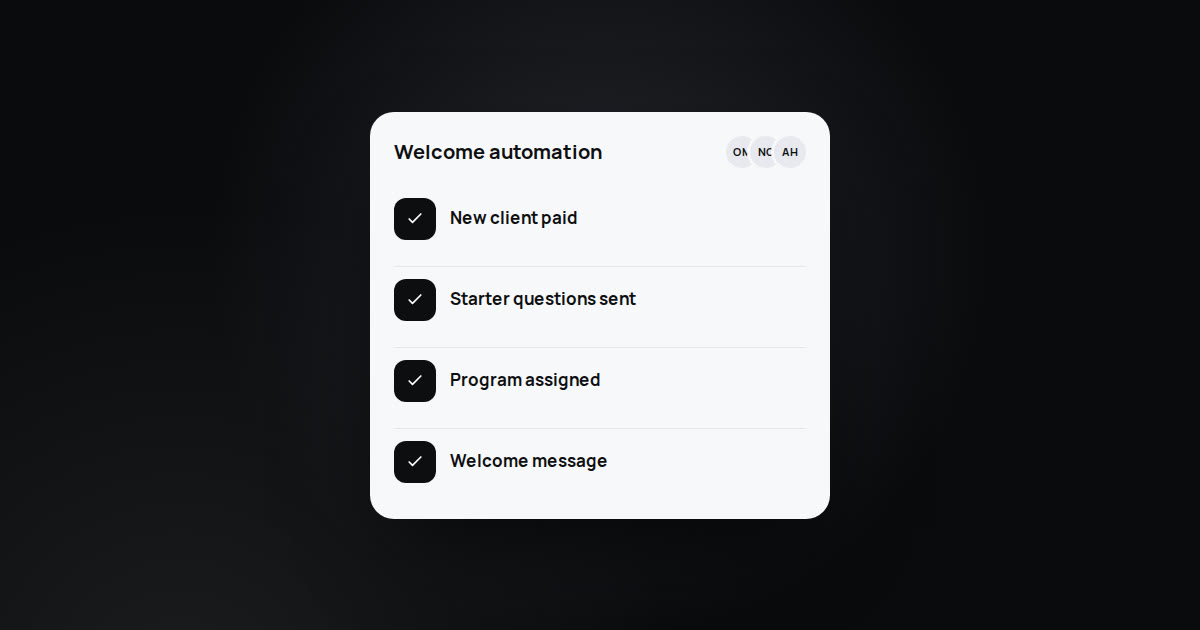
In a spreadsheet this step gets lost in the noise. In UM you can see who missed a check-in and whose subscription is about to end on one screen, and set up automations for the recurring reminders instead of keeping them in your head.
Renewal reminders that don’t feel like a bill
Renewal shouldn’t be a “your plan expired” message on the last day. Start a week earlier and talk about what’s next, not about money.
- 7 days before: a month review: what was achieved and the plan for next month.
- 3 days before: the renewal message itself, with package, price and how to pay.
- On the day: a friendly nudge if they haven’t answered.
A script you can copy: “[Name], this month you lost 4 cm off your waist and added 10 kg to your squat. Next month I want us to focus on [goal]. Your plan ends on [date]. Shall we keep going on the same package?”
UM tracks subscriptions, packages, who paid and who is expiring. Clients pay you directly, and every fee goes to you with 0% commission.
Última atualização: